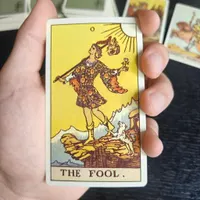
The short answer: the Death card (XIII of the Major Arcana) almost never means physical death. It means an ending that makes room for something new: a chapter closing, a version of your life you have outgrown, a change that has already begun. Upright, it says let the old thing go, because the new thing is waiting behind it. Reversed, it means an ending that is being resisted or dragged out, and the relief that comes once you stop holding on. In a yes-or-no reading it is a no to things staying as they are, and a quiet yes to change.
| Death | |
|---|---|
| Number | XIII (13), Major Arcana |
| Upright keywords | Endings, transformation, transition, release, clearing the way |
| Reversed keywords | Resisting change, stagnation, an ending dragging on, delayed renewal |
| Love | A relationship changing form; the end of an old pattern; a fresh start |
| Career | A job or role ending, a restructure, a change of direction |
| Yes or no | No to “as it is now”; yes to “will things change?” |
| Astrology | Scorpio |
| Element | Water |
| Hebrew letter | Nun (“fish”) |
| Other names | L’Arcane sans nom, “the arcanum without a name” (Tarot de Marseille) |
Why the Death Card Scares People (and Why Readers Love Pulling It)
Ask any working tarot reader which card clients flinch at and they will name this one. Yet among readers it is one of the most welcome cards in the deck, because it is honest: it says the thing you have been sensing is real, a chapter really is closing, and that is what lets the next one start.
Three facts take the fear out of it:
- It is card XIII of 22, not the last card. After Death comes Temperance (healing, balance), then the rest of the journey all the way to The World. In the tarot’s own sequence, Death is a middle chapter, not the end of the story.
- The oldest decks didn’t even name it. In many Tarot de Marseille decks card XIII is the only Major Arcana card printed without a title. French readers still call it l’Arcane sans nom, the nameless arcanum. The skeleton with a scythe is mowing a field, and new hands and feet are already sprouting from the ground he has cleared.
- Responsible readers don’t predict deaths. Many professional readers have a personal rule never to forecast anyone’s death, and none of the experienced readers we’ve reviewed reads card XIII that way. When it appears in a health question, it is read as recovery from an old condition, a lifestyle change or a period of rest.
So if you have just pulled it, breathe. You have drawn the card of transformation, and the next question is simply what is transforming.
What the Death Card Looks Like
The Rider-Waite-Smith Death card (drawn by Pamela Colman Smith, 1909) is a small play in one scene:
- A skeleton in black armour rides a white horse. The armour says this force can’t be argued with; the white horse is purity. The change is clean, not cruel.
- A black banner with a white, five-petalled rose. The rose is the “mystic rose” of the Golden Dawn tradition: beauty and life carried by the ending.
- A king lies fallen, his crown on the ground. Power and status don’t stop change.
- A bishop stands with his hands together, facing the rider and pleading.
- A young woman kneels and turns her face away.
- A child kneels and looks straight up at the rider, open and curious, offering flowers.
- In the background a boat sails down a river, and between two towers the sun is rising. The same two towers appear on The Moon card. On the far side of this card it is already morning.
Read the whole picture and the meaning is plain: everything in the foreground is ending, and the sunrise in the background is the point.
The Four Figures Test: How Will This Ending Go for You?
This is the part most card-meaning pages skip, and it’s the most useful thing on the card. The four people in front of the horse are four ways of meeting change. When Death turns up, ask yourself honestly which one you are right now:
| Figure | How they meet the ending | What it looks like in your life | What the card asks of you |
|---|---|---|---|
| The king (fallen) | Refuses it and is knocked down | Holding on to a role, a relationship or an identity long after it stopped fitting | Put the crown down before it’s taken from you |
| The bishop (pleading) | Bargains with it | ”If I just try harder, it can go back to how it was” | Stop negotiating with what’s already over |
| The maiden (looking away) | Can’t bear to look | Avoiding the conversation, the decision, the bank statement | Turn around and look; it’s less frightening faced |
| The child (looking up) | Meets it with curiosity | ”OK, this is ending. What comes next?” | This is the posture the card rewards |
The child is the only figure the rider isn’t trampling. That’s the card’s whole teaching in one image: the same change that flattens the king passes gently by the one who is open to it. In a reading, this is how you turn a frightening card into a plan.
The Death Card Upright Meaning
Upright, Death says one chapter is closing so the next can begin. It often appears when:
- Something has run its course: a job, a friendship, a living situation, a habit, a version of yourself.
- A transition is already underway. Death rarely announces a change out of nowhere; it confirms one you have felt coming.
- You need to clear space. New things can’t arrive in a full room. The card is a permission slip to let go.
- A real transformation is possible. Done well, this is the card of people who come out of a hard year as someone new.
Death is slower and deeper than the Wheel of Fortune (luck turning) and gentler than The Tower (sudden collapse). It is a season, like autumn: the leaves fall because the tree is getting ready for spring.
The Death Card Reversed Meaning
Reversed, the ending is still there, but something is slowing it down:
- Resisting change. The king’s posture: holding on to what’s already gone.
- Stagnation. Days that feel the same; a situation stuck in limbo.
- An ending dragging on. The on-off relationship, the job you keep “about to quit”.
- Fear of the unknown. Not knowing what comes next feels worse than staying.
- A second chance. Some readers also read Death reversed as a narrowly avoided ending: something you thought was over still has life in it.
The encouraging reading: Death reversed is the card just before relief. The moment you stop holding on, the card turns upright, and most people say afterwards that the letting go was the hardest part.
The Death Card in Love
In a relationship: Death rarely means a breakup. Much more often it means the relationship is changing form: the honeymoon phase ending and a deeper one beginning, moving in together, becoming parents, or the end of an old argument you have both outgrown. Something about how you are together is closing so that something better can start.
Single: the end of a pattern. Death often appears when you are finally done with a type: the unavailable one, the one who needs rescuing. Clearing that out is what makes room for a different kind of person.
Reversed in love: a relationship stuck between ending and continuing, or a pattern you keep repeating. The card asks for a decision either way.
What the Death card means for feelings
If you asked how someone feels about you and drew Death, their feelings are in transition. They may be closing an old chapter themselves (a past relationship, a hard year), or what they feel for you is changing into something new. It’s a strong card, never an indifferent one. Reversed, they may be stuck, holding on to the past or afraid of what changing would mean.
Does Death mean my ex is coming back?
Death says the old relationship, as it was, is over. That is not always a no. Plenty of couples come back together, but when they do after a Death card, it’s a new relationship, not a rerun of the old one. With the Six of Cups or Judgement beside it, a return is possible; with the Ten of Swords, the cards are telling you to close the door and open a new one. For a closer look at this question, see signs your ex is coming back.
The Death Card in Career and Money
Career: a role is ending or changing: a restructure, a contract finishing, a business pivot, or you outgrowing the job. It is one of the classic cards for a career change you have been circling for a while. Reversed: you are staying somewhere you’ve already left in spirit. Start planning the exit and the anxiety usually drops.
Money: an old financial pattern ends. Paying off a debt, closing an account, changing how you earn. Reversed, clinging to a money habit that isn’t working.
Is the Death Card a Yes or No?
It depends on the question:
- “Will things stay the same?” No.
- “Will this situation change?” Yes.
- “Should I let go?” Yes.
- “Will we get back together?” Not as you were; only as something new.
On a simple one-card draw, most readers count Death as a no, as in our yes or no tarot cheat sheet: not as it is now; an ending has to happen first. Reversed, read it as “the ending is being delayed”.
Timing: When Does the Death Card Say It Will Happen?
In the Golden Dawn system used by most modern decks, Death belongs to Scorpio, the sign of transformation, which the Sun passes through from about October 23 to November 21. As this page goes up, we’re right in the middle of it: Scorpio season, the weeks after Halloween, the old Celtic turn of the year, when the dead leaves come down. Drawing Death now is about as on-theme as tarot gets.
As a timing card, Death is not instant. It describes a process of weeks to months: the end is usually visible already, and the new chapter follows once the clearing is done. Reversed, expect a delay until you let go.
Death in Each Position of a Spread
| Position | What it usually means |
|---|---|
| Past | A chapter you have already closed, and you’re stronger for it |
| Present | You’re in the middle of a transition right now |
| Future | A change is coming; get ready to let something go |
| Obstacle | Fear of change, or holding on to something that’s finished |
| Advice | Let it go. Make the clean break you’ve been putting off |
| Outcome | A real transformation: you come out of this changed, for the better |
For how positions work in a three-card or ten-card layout, see three-card tarot spreads and the Celtic Cross.
Death vs The Tower vs the Ten of Swords: Three Kinds of Ending
Readers often confuse the three “ending” cards. They mean different things:
| Death (XIII) | The Tower (XVI) | Ten of Swords | |
|---|---|---|---|
| Speed | Gradual, a season | Sudden, a lightning strike | Final, the last moment |
| Feels like | Autumn: things falling away | An earthquake | Rock bottom |
| Cause | Natural end of a cycle | Something built on false ground collapsing | Exhaustion; a painful situation finally over |
| The message | Let go; renewal follows | The truth is out; rebuild on solid ground | It’s over, and the only way now is up |
| What follows in the deck | Temperance: healing | The Star: hope | Ace of Swords: a new clarity |
Every one of the three is followed by a hopeful card. That isn’t an accident of numbering; it’s how the deck was designed to be read.
The Death Card in Common Combinations
| Combination | Common reading |
|---|---|
| Death + The Lovers | A relationship transforming; a new commitment, or a choice that ends an old one |
| Death + Ten of Cups | A family or relationship entering a new, happier chapter |
| Death + Six of Cups | Letting go of the past; or someone from the past returning in a new form |
| Death + Judgement | A rebirth; a second chance at something you thought had ended |
| Death + The Star | Healing after a hard ending; hope returns |
| Death + The Tower | Big, fast change; a complete clear-out |
| Death + Wheel of Fortune | A major life turning point |
| Death + Eight of Cups | Walking away by choice; leaving something emotionally finished |
| Death + Ace of Cups | A new emotional beginning, often new love |
| Death + Ace of Pentacles | A new job or income stream after one ends |
| Death + The Hanged Man | A pause before the transition; waiting at the threshold |
| Death + Five of Cups | Grief for what ended; the card asks you to turn round to the two cups still standing |
Questions to Ask When the Death Card Appears
- What in my life is already ending, whether or not I’ve admitted it?
- Which of the four figures am I right now: the king, the bishop, the maiden or the child?
- What am I making room for by letting this go?
- What would the “child” version of me do next?
- What does the sunrise in the background of this card look like for me?
Getting a Reading When the Death Card Comes Up
Death tells you that a chapter is closing. A reader can help with the harder part: what is ending, what is starting, and how fast, by reading it against the cards around it and your actual situation. These three tarot readers from our audits are especially good at transitions:
1. Psychic Safina (Kasamba) — Best for a Crossroads

Clients repeatedly call Safina a “guiding light” through career transitions, which is exactly where Death tends to land. She cross-checks the cards with astrology, so you get timing as well as meaning, and she has kept a 4.9 for nearly two decades.
2. Athena Love (Purple Garden) — Best for Honest Answers About an Ending

Athena’s bio famously tells people who only want confirmation to book someone else, and her clients say that honesty is the point. When Death appears in a love question, she’s the reader who will tell you whether it’s an ending or a transformation, and what you can still change.
3. Nick (Purple Garden) — Best Pure Tarot Reading
Nick is a tarot specialist rather than an impression-led psychic, which suits a card like Death: his readings stay anchored to the spread in front of you. A perfect 5.0 over five years of volume is the hardest thing to fake.
New clients get 3 free minutes plus 50% off the first reading on Kasamba (up to $50 off) and a $30 credit on Purple Garden. Prefer to talk it through on the phone? On Keen your first 5 minutes cost $1. More tarot readers: best online tarot reading sites.
Frequently Asked Questions
Does the Death card mean someone will die?
Almost never. The Death card means an ending that makes room for something new: a chapter closing, a change of direction or the end of an old pattern. Many professional readers have a rule never to predict anyone’s death, and card XIII is read as transformation.
What does the Death card mean in love?
Usually that the relationship is changing form, not ending: the honeymoon stage giving way to something deeper, a new commitment, or the end of an old pattern. For singles, it often marks being finished with a type of partner, which clears the way for someone different.
What does the Death card reversed mean?
Resisting an ending, stagnation or a situation dragging on. The change is still coming, and the card suggests the relief arrives once you stop holding on. Some readers also read it as a second chance at something you thought was over.
Is the Death card a yes or no?
On a simple draw, no: not as things are now, because an ending has to happen first. If your question is “will this change?” or “should I let go?”, Death answers yes.
What does the Death card mean for feelings?
Their feelings are in transition: they may be closing an old chapter, or what they feel for you is changing into something new. It is an intense card, never an indifferent one.
What zodiac sign is the Death card?
Scorpio, the sign of transformation, in the Golden Dawn system used by most modern decks. The Sun is in Scorpio from about October 23 to November 21. Its element is water and its Hebrew letter is Nun.
Why is the Death card number 13?
It sits thirteenth in the Major Arcana, the middle of the Fool’s journey, followed by Temperance (healing). In many Tarot de Marseille decks it is the only Major Arcana card printed without a name, which French readers call “the arcanum without a name”.
Is it bad to pull the Death card?
No. Most readers are glad to see it, because it confirms a change you have already been sensing and promises renewal after it. The rising sun in the background of the Rider-Waite-Smith card is the point of the picture.
Related Guides
- Tarot card meanings for beginners
- Yes or no tarot cheat sheet
- The Devil tarot card meaning
- Wheel of Fortune tarot card meaning
- How to read tarot cards
- Halloween tarot spreads
A Halloween tarot reading done properly: a free three-pile Samhain pick-a-card with full reveals, the five questions Halloween is best for, a ready-made year-ahead spread to paste into a reader's chat, and six tarot readers from our advisor audits on Kasamba and Purple Garden (plus Keen for phone tarot) with their rates, track records and what a 15-minute first reading costs.
Read the guide →Still weighing it up? The fastest way to know if a reading clicks is to try one — 3 free minutes + 50% off for new clients.
Free to join · 3 free minutes on your first reading · No subscription
Ready to get your reading?
Pick the one that fits your question — every link is an independent recommendation.
3 free minutes + 50% off
Permanent chat transcripts & 3 free minutes on your first reading — safest for testing relationship specialists.
Claim 3 Free Min + 50% Off →Claim 3 Free Min →
$30 free credit
Mandatory video intros & a public outcomes ledger. The most accessible entry price.
Claim $30 Credit →Claim $30 Credit →
5 free minutes
Your first 5 minutes are credited back after the first reading, and a disappointing session can earn up to 10 minutes back.
Claim 5 Free Min →Claim 5 Free Min →Offer is for new customers only. Used Kasamba before? Try Purple Garden — see their top tarot readers →
Eastern Alignment is reader-supported. If you sign up through a link, we may earn a commission — at no extra cost to you. This never influences my ratings.