
The first time I got a tarot reading for a love question, I walked away with nothing useful. The reader described “an energy of transition” and “a door opening to new possibilities.” I had spent eleven dollars per minute to hear language that could have been on a motivational poster.
The second time, I walked away from a 22-minute session with a clear map of why my relationship kept hitting the same wall, what my partner’s current internal resistance was about, and a three-step framework for what I could change on my end. I had three pages of notes. I re-read them for weeks.
The difference was not the cards. The difference was the reader —and the questions I asked.
This guide is about making sure you experience the second kind.
What Tarot Actually Is (And What It Is Not)
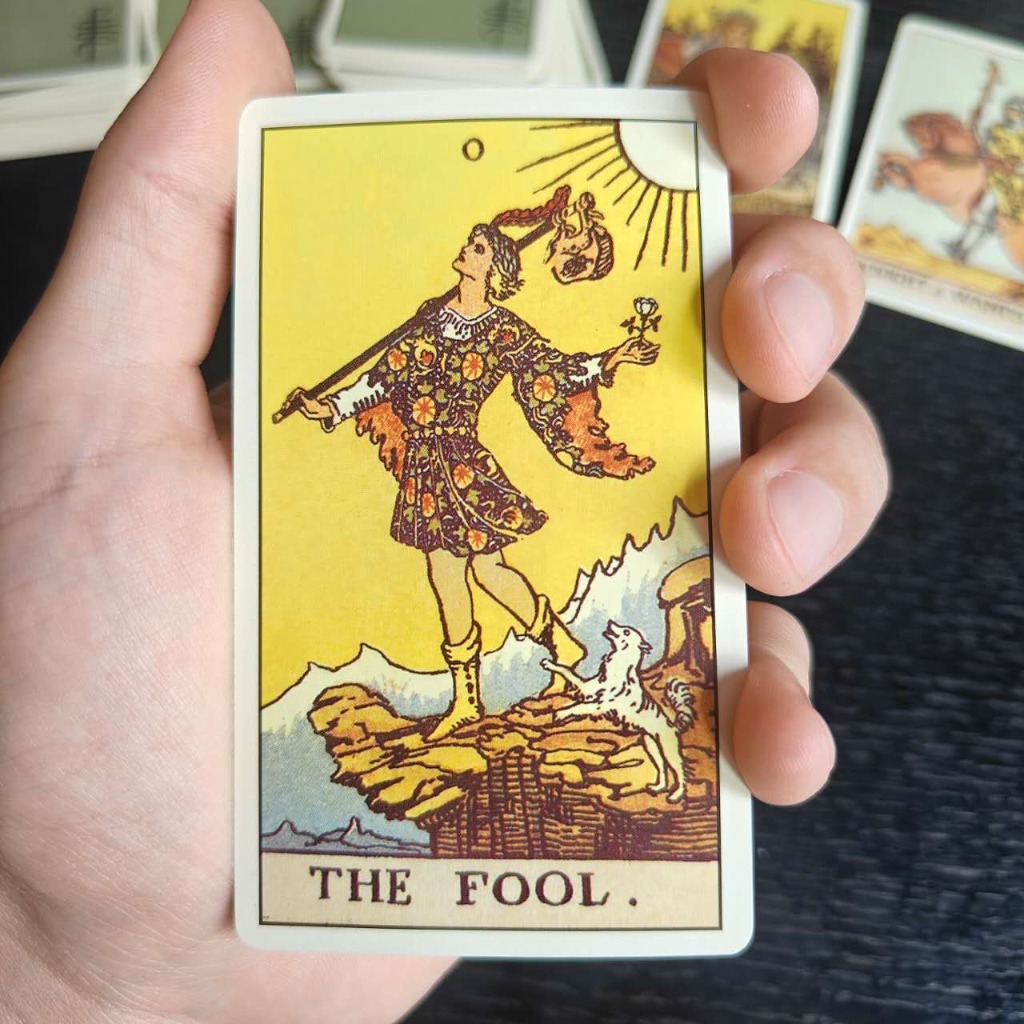
Tarot is a deck of 78 cards with defined symbolic meanings. It is split into two sections: 22 Major Arcana cards representing major life themes and archetypal forces, and 56 Minor Arcana cards representing day-to-day energies across four suits.
What tarot is not is a random card generator. In the hands of a skilled reader, the cards act as a structured framework for intuition —a visual language that helps the reader access and articulate impressions that might otherwise remain too diffuse to communicate clearly. The cards provide specificity. A skilled reader provides the intuitive interpretation.
What this means practically: the deck cannot read your relationship. The reader reads your relationship, using the deck as a diagnostic interface.
The “Will He Come Back?” Problem
The most common love tarot question I encounter —in online forums, in client testimonials, in my own early research —is some variation of “will he come back?” This is also the least useful question you can bring to a tarot session.
Here is why: tarot maps energy and trajectory. It does not flip a binary switch. When you ask a yes/no question, you are forcing the reader to collapse a complex probability field into a word, which strips out all the nuance that makes a reading valuable.
A more useful version of the same question: “What is the current state of his feelings for me, and what trajectory is the connection on?” This opens the reading to actual information.
The Major Arcana Cards Most Likely to Appear in Love Readings
If you are going to understand a love tarot reading, you need to know the cards that appear most frequently in this context and what they genuinely indicate.
The Lovers (Card VI)
Possibly the most misunderstood card in love readings. The Lovers does not simply mean romance or compatibility. It represents a significant choice —often a choice between two paths, two values, or two versions of your life. In a love reading, it frequently appears at moments of real decision: stay or leave, deepen or pull back, commit or preserve freedom. A skilled reader will identify which choice the card is pointing toward.
The Tower (Card XVI)
Feared for obvious reasons. The Tower depicts a structure being struck by lightning and collapsing. In a love reading, this almost never means simple, clean endings. It means that something built on false grounds is being forcibly cleared. This can be a relationship, but it can also be a belief about the relationship —an illusion the querent has been sustaining that can no longer hold. It is often deeply uncomfortable in the short term and clarifying over time.
The Two of Cups
Often described as the love card of the tarot. It depicts mutual recognition, emotional alignment, and a balanced exchange of feeling. In a position describing your partner’s energy, it suggests genuine, reciprocal feeling. In a position describing the trajectory of the connection, it is one of the most positive cards in the deck for love readings.
The Ten of Swords
A card of endings —specifically, the ending of a cycle that could not be sustained. In a love reading, it often appears when a relationship has genuinely run its course. However, it is important to note that the Ten of Swords is always followed by the Ace —the beginning of a new cycle. The most skilled readers will identify what the new beginning looks like beyond the ending the card is marking.
The Moon (Card XVIII)
The Moon governs illusion, confusion, and subconscious patterns. In a love reading, it frequently appears when something in the situation is not what it appears to be —either the querent is idealizing their partner, or the partner is not being honest about their internal experience. A skilled reader will use the Moon as a prompt to explore what is being concealed or distorted.
The Star (Card XVII)
One of the most hopeful cards in the deck. The Star represents renewal, restored hope, and a sense of calm following turbulence. In a love reading following a painful separation, it often signals that healing is genuinely occurring —and that the period of confusion and pain is beginning to clear. It does not guarantee a reunion; it guarantees that you are moving toward something better.
The Three Spreads That Actually Work for Love Questions
1. The Three-Card Spread: Past, Present, Future
The most accessible spread for a specific question. Three cards are drawn: the first representing the past energy influencing the current situation, the second representing the present state, and the third representing the trajectory or likely outcome.
Best for: Clients who have a clear, specific question and want a fast, focused answer. “Where is this reconnection attempt headed?” “What is blocking us from moving forward?”
What to watch for: A skilled reader will not give you three disconnected card interpretations. They will tell you a story —how the past energy created the present situation, and how the present situation is generating the projected trajectory.
2. The Celtic Cross: The Full Picture
Ten cards. The most comprehensive spread in standard tarot practice. It covers your current situation, the crossing challenge, subconscious influences, recent past energy, potential near-future outcome, environmental factors (what is outside your control), your own internal state, how others perceive the situation, and the likely long-term trajectory.
Best for: Complex, high-stakes situations where a simplified answer would be misleading. Long-term relationship dynamics, will-he-or-won’t-he situations with significant history, situations involving third parties.
What to watch for: The Celtic Cross in the hands of a mediocre reader produces ten card definitions strung together. In the hands of a skilled reader, it produces a narrative arc that accounts for the relationship between all ten positions. If your reader is just defining cards one by one, they are not reading the spread.
3. The Relationship Spread
Three cards: one representing your energy in the connection, one representing their energy, and one representing the dynamic between you.
Best for: When you want to understand the fundamental architecture of the connection —not just what is happening, but why. This spread is exceptionally useful when the relationship dynamic feels confusing, contradictory, or stuck in a pattern you cannot name.
How to Ask Questions That Generate Useful Answers
The question you bring to a love tarot reading shapes everything that follows. These guidelines will make an enormous difference in the quality of your session.
Replace yes/no questions with open-ended diagnostics:
- Instead of: “Will he text me?” —Ask: “What is his current emotional state regarding our connection, and what is the most likely next movement?”
- Instead of: “Is she my soulmate?” —Ask: “What is the nature of this connection and what is it here to teach me?”
- Instead of: “Should I reach out?” —Ask: “What is my aligned next action in this situation?”
Focus on understanding rather than prediction: The most actionable readings diagnose a dynamic rather than tell you what will happen. Understanding why your partner pulls away gives you more power than knowing when they will return.
Bring specificity: “My ex and I ended things six weeks ago after three years. He initiated the breakup but has texted twice since. I want to understand his current internal state and where this is headed.” This is infinitely more useful than “I broke up with someone, can you tell me if we’ll get back together?”
Finding a Tarot Reader Who Delivers Real Insight
On platforms like Kasamba and Keen, tarot readers range from extraordinary to completely generic. The vetting process is critical.
How to Test a Tarot Reader in the First 3 Minutes
On Kasamba, you receive 3 free minutes with every new reader. Use them strategically:
- Provide your question precisely and concisely —do not pad it with backstory.
- Give the reader your birth date and the name of the person in question.
- In the remaining time, watch whether they are naming specific cards and explaining how those cards answer your specific question —or whether they are speaking in generalities.
A legitimate tarot reader will say something like: “The Eight of Cups appeared in the position representing his current state —this indicates he has walked away from something he still values, not out of indifference, but because he feels something fundamental needs to change.” That is a specific, interpretive statement tied to a card, a position, and your question.
A mediocre reader will say: “I see a lot of emotional energy around this connection. There are changes happening on both sides.” This tells you nothing.
The One Question Worth Asking Every Time
After years of consulting tarot readers and analyzing what made readings genuinely useful versus politely useless, I have identified one question that consistently generates the highest-quality output:
“What is the thing I most need to understand about this situation that I am currently not seeing?”
This question bypasses the yes/no trap, bypasses the prediction trap, and asks the reader to function at their highest capacity —as an intuitive diagnostician identifying the blind spot in your perception. The answers to this question are almost always the things that stay with you for months.
FAQs
Can I do my own love tarot reading, or do I need a professional?
You can absolutely read for yourself, especially for smaller questions or emotional processing. The limitation of self-reading is confirmation bias —it is very difficult to be a neutral interpreter of your own situation when you are emotionally invested in the outcome. A skilled external reader provides objectivity your own intuition cannot fully supply when your feelings are running high.
Is tarot more accurate than other psychic methods for love questions?
“More accurate” is the wrong frame. Different methods serve different needs. Tarot provides a structured, symbolic framework that works extremely well for understanding dynamics and trajectories. Pure clairvoyance (like what Seek Chelle or Love Stefans use on Kasamba) is faster and more direct but bypasses the symbolic layer entirely. The best approach depends on whether you need a comprehensive map or an immediate energetic reading.
What if I get a card I am afraid of?
A skilled tarot reader will always contextualize a difficult card. The Death card, the Tower, the Ten of Swords —none of these are sentences of doom. In a love reading, every challenging card describes a process, not a fixed verdict. A reader who allows you to remain terrified of a card without contextualizing it is not doing their job.
Find a Love Tarot Reader on Kasamba (3 Free Minutes + 50% Off) →
Find Verified Readers on Purple Garden ($30 Free Credit for New Users) —>
Or Try Keen With Built-In Reviews (5 Mins for $1) —>
A Journeys-based ranking of the most accurate psychics on Purple Garden in 2026. Five readers selected by verified prediction accuracy from the platform's public outcome ledger, video bio authenticity signals, and documented track records on relationship and love questions.
Read the guide →Ready to Try a Reading?
I've personally tested every major platform. Here are my top picks for 2026 — with free introductory minutes so you can try risk-free.
Still weighing it up? The fastest way to know if a reading clicks is to try one — 3 free minutes + 50% off for new clients.
Free to join · 3 free minutes with each new advisor · No subscription
Ready to get your reading?
I’ve personally tested each platform with my own money. Pick the one that fits your question — every link is an independent recommendation.
3 free minutes + 50% off
Permanent chat transcripts & 3 free minutes with every new advisor — safest for testing relationship specialists.
Claim 3 Free Min + 50% Off →
$30 credit on first purchase
Mandatory video intros & a public outcomes ledger. The most accessible entry price.
Claim $30 Credit →
5 minutes for $1
Deepest roster & finest phone infrastructure. The safest place to test a top reader for pocket change.
Get 5 Min for $1 →Eastern Alignment is reader-supported. If you sign up through a link, we may earn a commission — at no extra cost to you. This never influences my ratings.