If you are thinking about booking a spiritual reading for the first time, one of the first problems you will encounter is not finding a reader.
It is figuring out what kind of reading you actually want.
Online services commonly offer psychic readings, tarot readings, astrology readings, mediumship, and several variations of each. The terminology can be confusing, especially because readers sometimes combine multiple approaches in a single session.
A psychic reading is not simply another name for a tarot reading, and astrology works from a fundamentally different framework again.
So which one should you choose?
There is no single option that is best for everyone. The right choice depends on what you want to explore, how you prefer to receive information, what kind of interaction you want with the reader, and how much structure you want the session to have.
This guide explains the practical differences so you can choose a reading based on your actual needs rather than simply picking the most popular option.
The Short Answer
If you want a conversational reading centered primarily on intuitive impressions, a psychic reading may be the most natural fit.
If you prefer a structured symbolic system and want to explore a specific question through cards, tarot may be a better fit.
If you are interested in personality, life themes, timing, or patterns derived from birth information and planetary positions, astrology offers a different approach.
And if your primary interest is communicating with someone who has died, mediumship is the category most directly associated with that goal.
These categories can overlap. A reader may use tarot while also describing themselves as psychic, or combine astrology with intuitive interpretation.
The important point is that the method and the reader’s style can vary substantially even within the same category.
What Is a Psychic Reading?
A psychic reading generally centers on the reader’s claimed intuitive perception or psychic impressions rather than requiring a specific physical tool.
The reader may discuss themes involving relationships, career, personal circumstances, life direction, or other questions. The format can range from a relatively open-ended conversation to a highly focused session built around a particular question.
Because there is no single standardized procedure for psychic readings, two readers who both advertise themselves as psychics may conduct very different sessions.
One may be highly conversational and ask you questions throughout the reading. Another may provide a more continuous interpretation with relatively little input from you. Some may incorporate tarot cards, astrology, or other systems even though the service is marketed primarily as a psychic reading.
That means the label “psychic” is less informative than the reader’s actual profile and description of the service.
If you are considering one, read what the individual reader says they specialize in and how they conduct their sessions.
A psychic reading may be a good fit if:
- You want an open-ended conversation.
- You have a situation rather than a single narrowly defined question.
- You prefer intuitive interpretation over a formal symbolic system.
- You want the reader to guide the structure of the session.
- You are interested in exploring several related aspects of the same situation.
What Is a Tarot Reading?
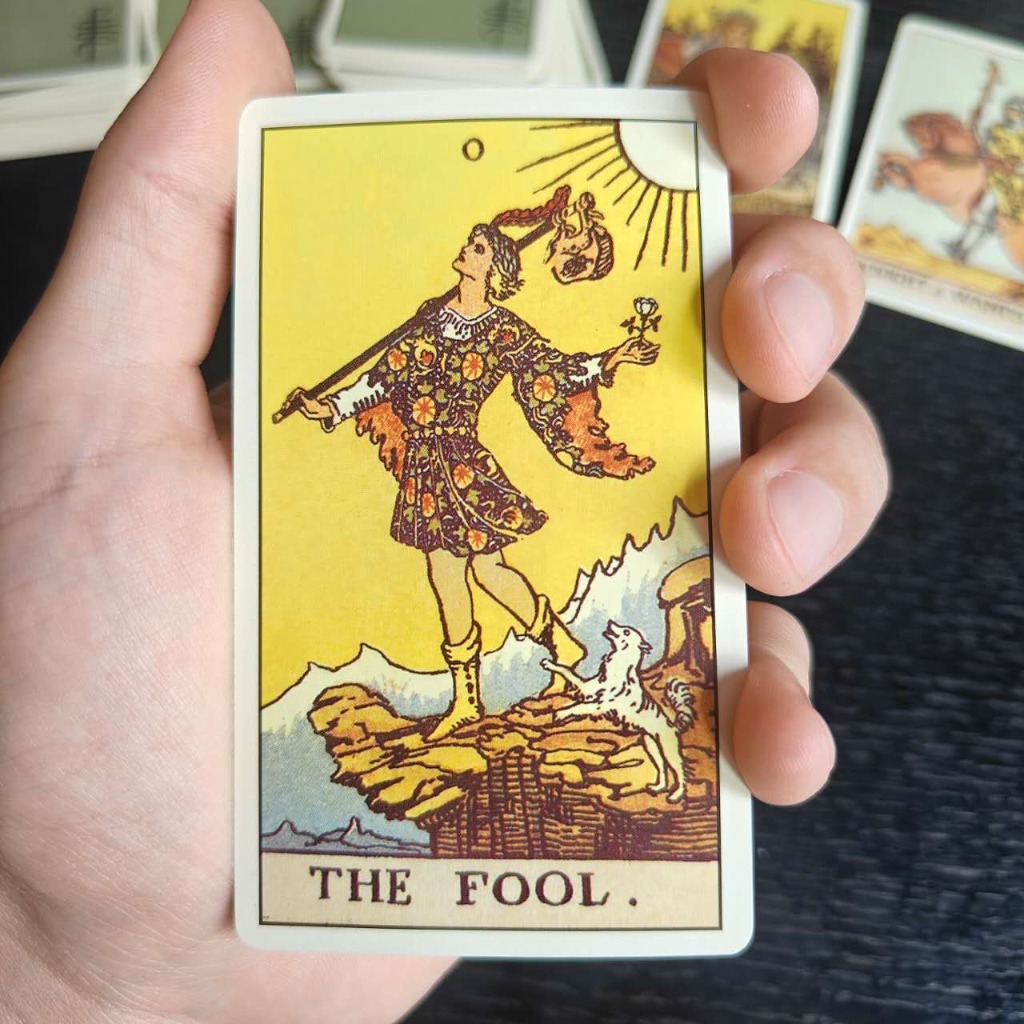
Tarot readings use a deck of tarot cards as the primary interpretive framework.
A traditional tarot deck contains 78 cards divided into the Major Arcana and Minor Arcana. During a reading, cards are selected and interpreted according to their imagery, symbolism, position within a spread, and relationship to the question being explored.
This gives tarot a greater degree of visible structure than a purely intuitive reading.
You can see the cards that are drawn, discuss their symbolism, and ask how particular cards relate to your question. Different readers may use different spreads and interpret the same card somewhat differently.
That variation is part of tarot.
A tarot reading is therefore not simply a matter of drawing a card and receiving a predetermined answer. The reader’s interpretive approach, the spread being used, and the question itself all influence the session.
Tarot may be a good fit if:
- You like symbolic or visual systems.
- You have a particular question you want to explore.
- You want to see the cards used during the reading.
- You enjoy discussing multiple interpretations.
- You prefer a reading with a recognizable structure.
Tarot can also be useful for questions where you want to explore different possibilities rather than receive a single definitive prediction.
What Is an Astrology Reading?
Astrology takes a different approach again.
Rather than primarily interpreting intuitive impressions or drawing cards during the session, astrology traditionally works with a person’s birth information and the positions of celestial bodies within an astrological chart.
A natal chart can be used to discuss themes such as personality, relationships, strengths, challenges, and broader life patterns. Some astrologers also examine planetary transits and other techniques when discussing particular periods or timing.
The amount of information required therefore tends to be different from a psychic or tarot session.
Depending on the type of astrology reading, you may be asked for:
- date of birth;
- exact or approximate birth time;
- place of birth.
The accuracy of a chart’s timing-related interpretation can depend on the quality of the birth information provided, particularly the birth time.
Astrology can therefore appeal to someone who wants a more systematic framework for interpreting personality and life patterns, rather than a primarily conversational intuitive reading.
Astrology may be a good fit if:
- You are interested in your birth chart.
- You want to explore personality or recurring life themes.
- You are interested in astrological timing.
- You enjoy systems with defined symbols and relationships.
- You are willing to provide accurate birth information.
What Is Mediumship?
Mediumship is related to psychic services but has a more specific focus.
A medium typically claims to communicate with or receive information associated with people who have died. Someone seeking a medium may therefore have a very different purpose from someone booking a general psychic reading.
This distinction is important because a reader who specializes in relationship guidance, tarot, or general intuitive readings may not be the appropriate choice for someone specifically seeking a mediumship session.
If communication with a deceased person is the central reason you are seeking a reading, look specifically for a reader whose profile identifies mediumship as a primary specialty. For a deeper breakdown of how mediums differ from psychics and tarot readers — they are three different jobs, not three strength levels of one job — see our psychic vs. medium vs. tarot reader comparison.
Psychic vs. Tarot vs. Astrology vs. Mediumship
| Type | Primary Framework | Usually Requires Birth Information? | Often Best For | Typical Experience |
|---|---|---|---|---|
| Psychic | Intuitive impressions | No | Open-ended personal questions | Conversational and flexible |
| Tarot | Tarot cards and symbolism | No | Focused questions and reflection | Structured and visual |
| Astrology | Birth chart and planetary positions | Yes | Personality, patterns, timing | Analytical and chart-based |
| Mediumship | Claimed communication with deceased people | Usually not essential | Grief, remembrance, spiritual connection | Highly personal and emotionally focused |
This table is a starting point rather than a strict rule. Individual readers can combine methods, and the experience can vary substantially from one practitioner to another.
Which Type of Reading Is Best for Love and Relationships?
There is no objectively “best” method for relationship questions.
The better choice depends on what you want to explore.
If you want an open conversation about the emotional dynamics surrounding a relationship, you may prefer a psychic reader who specifically focuses on love and relationships.
If you have a particular question and enjoy a symbolic framework, tarot can provide a structured way to explore the situation.
Astrology may appeal to you if you are interested in relationship compatibility, personality patterns, or broader astrological cycles.
The more useful distinction is therefore not:
“Which method predicts relationships best?”
but:
“Which type of session best matches the kind of relationship question I actually have?”
For example, someone asking:
“I am confused about where this relationship is going. I want to talk through the situation.”
may prefer a conversational reading.
Someone asking:
“I want to explore the dynamics surrounding this relationship through a tarot spread.”
may naturally prefer tarot.
Someone asking:
“I want to understand our birth charts and astrological compatibility.”
is looking for astrology.
The question should determine the method — not the other way around.
Which Is Better for Career and Life Direction?
Career questions can also be approached through different formats.
A psychic reading may appeal to someone who wants to discuss uncertainty around a career transition, competing options, or general direction.
Tarot can provide a structured framework for exploring the different factors surrounding a decision. Rather than treating the cards as a guaranteed prediction, some people use the reading as a way to examine possibilities they may not have considered.
Astrology can be particularly appealing to people who are interested in longer-term patterns, natal chart themes, or astrological timing.
Again, the important distinction is between exploration and certainty.
A reading can be used as a reflective experience, but it should not replace practical career research, professional advice, financial planning, or other real-world decision-making tools.
What If You Want to Ask About the Future?
This is where expectations matter most.
People frequently seek readings because they want to know what will happen next.
Different readers and traditions approach future-oriented questions differently, but you should be cautious about treating any reading as a guaranteed forecast.
A better way to frame a session is to explore possibilities, patterns, or factors that you may want to consider.
For example, instead of approaching the reading as:
“Tell me exactly what will happen.”
you might ask:
“What themes or possibilities should I consider as I think about this decision?”
That distinction does not require you to abandon your personal beliefs about psychic or spiritual practices.
It simply keeps the reading from becoming a substitute for your own judgment.
Should You Choose a Psychic Who Also Reads Tarot?
Possibly.
Many readers combine methods.
A reader may describe themselves as a psychic but use tarot cards during sessions. Another may specialize in tarot while also incorporating intuitive impressions. Some astrologers may integrate tarot or other spiritual practices into their consultations.
This is not necessarily a problem.
In fact, combining methods may be exactly what some customers prefer.
The important thing is to understand what the reader actually does during the session.
If you specifically want a tarot reading, confirm that tarot is a meaningful part of the service rather than assuming that every “psychic” session includes it.
Likewise, if you want astrology, make sure the reader actually works with natal charts or astrological techniques rather than simply using the word “astrology” as a general spiritual label.
How Your Choice of Reader Matters More Than the Label
The category of reading is only the first filter.
Once you know what type of session you want, the individual reader becomes more important.
Suppose you decide that tarot is the right format for you. You may still have hundreds of tarot readers to choose from.
At that point, look at:
- their stated specialty;
- experience on the platform;
- number of completed readings;
- customer reviews;
- communication style;
- price;
- reading format;
- and whether their approach matches what you want.
A tarot reader who specializes in relationship questions may be a better match for your needs than a more popular tarot reader whose profile focuses primarily on career or general readings.
The same principle applies to psychic and astrology services.
Method first, reader second, individual session third.
For the reader-selection half of that process, our guide to choosing a psychic reader walks the full evaluation sequence, and our reviews hub publishes in-depth reviews of individual advisors across the major platforms.
Don’t Choose Based Solely on the Method
There is another common mistake: treating the category itself as a quality guarantee.
A tarot reading is not automatically better because it uses cards.
An astrology reading is not automatically more reliable because it uses a birth chart.
A psychic reading is not automatically more personal because it is intuitive.
The method tells you something about how the session is structured, but it does not tell you whether a particular reader will provide a useful or satisfying experience.
That is why your final selection should combine two separate questions:
Question 1:
What type of reading do I want?
Question 2:
Which reader within that category seems like the best fit?
Answering only the first leaves you with too many choices. Answering only the second can lead you to select a reader whose method does not actually match your needs.
A Simple Decision Guide
If you are still unsure, start with the question you want answered.
Choose a Psychic Reading if:
You want a flexible, conversational session focused on intuitive impressions and your particular circumstances.
Choose Tarot if:
You enjoy symbolic interpretation and want a structured reading centered around cards and a specific question.
Choose Astrology if:
You are interested in birth-chart interpretation, personality patterns, relationships, or astrological timing.
Choose Mediumship if:
Your primary purpose is a session focused specifically on communication with someone who has died.
These are starting points, not guarantees.
What Should You Choose for Your First Reading?
For a first-time customer, simplicity is usually more useful than trying to combine several methods at once.
Start by identifying what you actually want from the experience.
If you have a specific question and enjoy visual symbolism, tarot is a natural option to investigate.
If you have a broader situation you want to discuss and prefer an open conversation, a psychic reading may be more suitable.
If you are fascinated by birth charts and want to understand larger patterns rather than simply discuss one immediate question, astrology may be the better starting point.
And if your purpose is specifically related to someone who has passed away, look for a reader whose primary specialty is mediumship.
You do not need to choose the most expensive option or the reader with the most impressive title.
You need to choose the method that matches your question and the reader whose actual service matches your expectations. Once you have that pairing, the first reading guide covers what the session itself will feel like.
A Practical Checklist Before You Book
Before paying for a reading, ask yourself:
What am I actually trying to explore?
If you cannot answer that, spend a few minutes writing down the issue first.
Do I want a conversation, a symbolic framework, or a chart-based interpretation?
That question can often narrow your choices immediately.
Does this reader specialize in the subject I care about?
A reader’s category is less important than whether their specific experience matches your question.
Do I understand what the session includes?
Check the format, duration, pricing, and what you can expect during the session — our breakdown of what a psychic reading actually costs covers the price side in detail.
Am I treating this as a source of reflection rather than guaranteed certainty?
Keeping this distinction clear can help you make better decisions both before and after the reading.
This checklist is the method-selection half of pre-booking due diligence. The other half — vetting the platform, the reader’s numbers, the session budget, and the red flags — is covered in the 13 checks to run before you pay for a psychic reading.
FAQs
Is tarot or a psychic reading more accurate?
Neither method is inherently more accurate, because accuracy is a property of the individual reader, not the tool. The method determines how the session is structured — tarot uses a visible symbolic system of 78 cards, while a psychic reading relies on the reader’s intuitive impressions in open conversation. Choose the structure you prefer, then evaluate the specific reader’s specialty, track record, and reviews within that category.
Can one reader do both psychic and tarot readings?
Yes, and many do. A reader may advertise as a psychic but use tarot cards during sessions, or specialize in tarot while incorporating intuitive impressions. This is not a problem — but confirm what the session actually includes before booking. If you specifically want tarot, verify that cards are a meaningful part of the service rather than assuming every psychic session includes them.
Do I need my exact birth time for an astrology reading?
It depends on the reading type. A full natal chart interpretation — especially anything involving the ascendant, houses, or timing techniques like transits — depends on birth time, and accuracy degrades without it. Readings focused only on sun, moon, and planetary sign placements tolerate an approximate time. If you do not know your birth time, tell the astrologer upfront and ask which techniques remain reliable without it.
Does the type of reading affect the price?
Not directly. Major platforms price per minute by reader, not by method — a tarot reader and a psychic at the same rate tier cost the same per minute. Where method does affect cost is session length: an open-ended psychic conversation tends to run longer than a focused tarot spread on one question, and a full natal chart reading is often the longest format. Budget by expected minutes, not by category.
Which type of reading is best for a complete beginner?
Match the method to your question, not to popularity. A specific, well-defined question pairs naturally with tarot’s structure. A broad life situation you want to talk through pairs with a conversational psychic reading. Interest in personality patterns and timing pairs with astrology. Grief-related goals pair with mediumship. For a first session, simplicity wins: pick the one method that fits your question rather than combining several at once.
The Bottom Line
Psychic readings, tarot readings, astrology, and mediumship are not interchangeable services.
They use different frameworks, attract different kinds of questions, and can produce very different experiences.
If you want a flexible, intuitive conversation, a psychic reading may make sense. If you prefer cards and symbolic interpretation, tarot may be the better fit. If you are interested in birth charts, personality patterns, or astrological timing, astrology offers a different approach. If your focus is specifically on communicating with someone who has died, mediumship is the more relevant category.
But the method is only the beginning.
Once you have chosen the type of reading, take the time to evaluate the individual reader. Look at their specialty, experience, reviews, pricing, communication style, and the actual description of their service.
The best choice is not necessarily the most popular method or the highest-rated reader.
It is the combination of a suitable method, a suitable reader, clear expectations, and a service you feel comfortable paying for.
Keep reading: What to Expect From Your First Psychic Reading · Chat, Phone, or Video: Which Format Is Best?
Chosen a method? The next decision is where to book it — start with our full Kasamba platform review, which covers readers across every method on this page.
The definitive guide to Kasamba's 3-free-minutes offer: the economic mechanics, the exact vetting protocol to use in each session, which reader tier to test first, and the common mistakes that burn the offer before you get any value.
Read the guide →