Here is the conclusion first, because the rest of this article is just the evidence for it.
On knowledge, an AI psychic scores about 9 out of 10 against an elite human reader. On structure and clarity, about 8.5. On the thing you are actually paying a psychic for — telling you something specific they had no way to know — AI scores near zero. Not low. Zero. That is not a limitation of today’s models. It is a property of how the technology works, and no future version will fix it, because the fix would require the machine to have an input channel it does not have.
I know this because I tested it properly: more than fifteen full sessions, each running twenty-plus rounds of follow-up questions, on ChatGPT 5.6 (Terra) — currently the strongest consumer model — using real questions from real situations, scored against the elite human readers I have spent three years reviewing. The summary table is below. The mechanics are after it, because once you understand the mechanics, the scores stop being surprising.
| Dimension (elite human reader = 10) | AI Score | One-Line Verdict |
|---|---|---|
| Knowledge accuracy (card meanings, astrology, terminology) | 9.5 | Better-read than almost any human |
| Structure and clarity of the reading | 8.5 | Clean, organized, quotable |
| Availability and speed | 10 | Instant, 24/7, no queue |
| Cost | 9.5 | Effectively free |
| Emotional warmth of delivery | 7.0 | Warm, but formulaically so |
| Apparent personalization (“this feels like it is about me”) | 6.0 | Feels tailored; is actually just your input reflected |
| Consistency across many rounds | 5.0 | Drifts toward whatever you seem to want |
| Honest limits (admitting it does not know) | 3.0 | Invents answers fluently instead |
| Evidential insight (specific truth it could not have known) | 1.5 | Structurally absent — the core finding |
| Accountability (any cost for being wrong) | 1.0 | None — it will not remember what it told you |
| Composite | 6.2 | A brilliant library, not a reader |
If you only take one sentence from this article: AI is not a less accurate psychic. It is a different product that resembles one — and confusing the two products is where the money and the bad decisions get lost.
What AI Actually Is, Underneath the Reading
Strip the mystique and an AI psychic reading is a three-layer machine. Each layer matters for understanding what the output is worth.
Layer 1: The Engine Is a Prediction Machine — Just Not the Kind You Think
A large language model does one thing: given a sequence of text, it predicts the most probable next token, then the next, millions of times per response. That is the entire mechanism. There is no perception, no tuning-in, no energetic channel — there is a statistical model of how text continues, trained on a significant fraction of the public internet.
The important part for this discussion is what was in that training data. The corpus contains essentially the entire written literature of Western esoterica: every major tarot book, astrological system, numerology framework, dream dictionary, and thousands of forum threads of people describing actual readings. When the model “knows” that the Three of Swords indicates heartbreak and betrayal, it knows it the same way it knows the capital of France — as text it absorbed. Its knowledge of the systems is genuinely excellent, broader than most human readers’. This is the 9.5 in the table, and it is real.
Layer 2: “The Psychic” Is a Prompt, Not an Entity
When you open an AI psychic app — or just tell ChatGPT “act as a psychic and read my cards” — here is what technically happens. A block of instructions (the system prompt) sets the persona: you are a gifted intuitive, speak warmly, reference the querent’s situation, frame everything as perception. Your message gets appended. The engine from Layer 1 then does the only thing it does: it continues the text in a way that is statistically consistent with the persona, the esoteric literature it absorbed, and — critically — everything you have typed in the conversation.
That last input is the one people underestimate. By round five of a session, you have told the machine your situation, your person’s name, your fears, your hopes, your history. It is not reading your energy. It is reading you — your actual words — and reflecting the patterns back with a fluency no human cold-reader could match. The feeling of “how did it know that?” has a precise answer: you told it, and it is the best pattern-matcher ever built.
Layer 3: When the Answer Is Not in the Data, It Generates One Anyway
The engine has no “I don’t know” state. Given a question whose answer exists nowhere in its training data and nowhere in your conversation — what is my ex feeling right now, will the offer arrive in March — it does exactly what it does with every other input: it produces the most plausible-sounding continuation. Researchers call this hallucination. In the psychic context it deserves a plainer name: confident invention, delivered in the same tone as the accurate parts, with no signal separating the two.
This is the mechanical root of the 3.0 for honest limits and the 1.5 for evidential insight. It is also why the failure mode is dangerous: a human fraud gives off tells (fishing questions, urgency, upsells — I have written a separate guide to spotting them). The AI’s invention has no tells, because it has no motive. It is not trying to sell you anything. It is just completing the pattern.
The human half of this comparison is built on our tested reader rankings — Top 10 Love Psychics Online and Most Accurate Love Psychics — plus the platform reviews for Kasamba, Keen and Purple Garden.
The Test: 15+ Sessions, 20+ Rounds Each, Scored Against Elite Humans
The method, briefly, so the scores mean something.
The setup. Fifteen-plus independent sessions on ChatGPT 5.6 (Terra), each one a real question from a real situation (anonymized), each run for a minimum of twenty rounds of follow-up questions — because the first response is always the best one, and the truth about these systems only emerges when you push past it.
The benchmark. The same questions, put to elite human readers I have verified over three years of reviews — readers with documented, checkable prediction records. Human elite performance is scored as 10 on each dimension.
The scoring. Each session scored blind on the ten dimensions in the summary table, then averaged across sessions. Two findings from the long rounds are worth naming before the verdicts:
Finding one: the drift is real and directional. Early rounds held up well — structured, knowledgeable, coherent. By rounds fifteen to twenty, in session after session, the readings had migrated noticeably toward whatever my follow-ups implied I wanted to hear. Push back on a prediction and the next round softened it. Express hope and the next round fed it. The machine is trained to be agreeable, and over a long conversation, agreeable compounds.
Finding two: the one thing that never happened. Across three hundred-plus rounds, the AI never once produced a specific, verifiable piece of information it could not have derived from my inputs or general knowledge. Not one. Every “insight” traced back to something I had typed. The human elites, in the same protocol, produced them regularly — that is the entire product.
Where AI Genuinely Helps (Use It for These, It Is Excellent)
The anti-AI take is as lazy as the hype. These systems are superb at four jobs in the spiritual space — use them without guilt.
1. Learning the systems. Card meanings, spread structures, astrological houses, what a North Node is, the difference between clairvoyance and clairsentience — AI is the best reference library ever made for this material, because you can interrogate it. “Explain the Tower card like I am a beginner, then give me three example spreads where it changes meaning.” Try getting that from a book.
2. A thinking partner for your situation. Describe your situation and ask the AI to structure it: what are the possible interpretations, what am I assuming, what would each choice imply. This is not a reading — it is applied reasoning over your own narrative, and it is genuinely clarifying. The value comes from your information organized well, and on that task the machine’s structure score (8.5) is earned.
3. Question preparation — the highest-value use. Most paid readings fail on a bad question, not a bad reader. Use AI as a pre-flight check: “Here is my situation. Help me turn this into one specific, answerable question for a psychic.” Vague anxiety in, one precise sentence out. That sentence is worth more than any free reading on the internet.
4. Privacy-first rehearsal. Some questions you cannot say to a human yet — not even a stranger on a platform. Practicing the conversation with AI first lowers the barrier to having the real one. Treat it as a rehearsal room, not a confessional.
Where AI Structurally Cannot Compete (Do Not Delegate These)
1. Evidential insight — the core product, absent by architecture. The entire value of a verified human reader reduces to one thing: producing specific, checkable information they had no access to. Every line of AI output, by contrast, is provably derived from two sources — its training corpus and your input. There is no third channel. This is not a current weakness awaiting a patch; it is what the machine is. A bigger model gets better knowledge and better fluency. It does not get a third channel. That is why the 1.5 is not pessimism — it is description.
2. Confident invention with no tells. When a human reader does not know, the good ones say so (and the bad ones show recognizable fraud patterns). When the AI does not know, it generates — smoothly, warmly, indistinguishably from its accurate output. Across my test sessions the invented specifics were the most convincing content produced. You cannot fact-check a reading from inside the reading, which makes this the single most dangerous property of AI psychics.
3. The sycophancy drift. A top human reader’s most valuable moments are the ones you do not enjoy: the reunion they tell you is not coming, the pattern they name that you did not want named. Our review data across three years is unambiguous — uncomfortable accuracy is the strongest marker of the real thing. AI is trained in the opposite direction: user satisfaction is the reward signal, so over a long session it converges on what pleases you. The longer you talk, the less it challenges you. That is the exact opposite of a good reader.
4. Reading the room. A skilled human on a phone or video call is processing continuously: your hesitation before a name, the exhale after a sentence, the question you started and abandoned. That stream of micro-data is real input, and elite readers use it. AI gets none of it — only the words you commit to text. An entire sensory channel of the reading is simply not there.
5. Accountability. A human reader on a platform operates inside a reputation economy: reviews, repeat clients, a track record that collapses if they are consistently wrong. That pressure disciplines the product. AI answers to nothing. It will not remember tomorrow what it told you today, and no version of your outcome — good or catastrophic — touches it. A product with zero cost for being wrong will, over enough use, be wrong in ways that cost you.
The Verdict, In Full
Stop asking whether AI psychics are “real.” That is the wrong frame, and both the hype and the debunking feed on it. Ask instead which layer of the product you are buying.
The knowledge layer: AI wins, use it freely. For learning systems, checking meanings, structuring your thinking, and preparing a sharp question, AI is better than any book and cheaper than any reader. This layer is about 60% of what people casually call “a reading,” which is why AI readings feel so satisfying.
The insight layer: AI is absent, do not delegate it. For the specific, checkable, “how could they know that” information that is the entire reason to consult a psychic — AI does not score low, it scores zero, and it always will. The architecture has no channel for it. If your question carries real stakes — a relationship, a marriage, a decision you cannot easily reverse — this is the layer you need, and a language model does not sell it at any price.
The accountability layer: AI has none, price it accordingly. Free is the correct price for a product with no cost for being wrong. The moment you would pay real money — or worse, make a real decision — on the output, you have assigned it authority it has no mechanism to deserve.
The one-line version: AI is the best library the spiritual world has ever had. A library is not a reader. Use the library constantly — and when the question actually matters, bring your one precise, AI-rehearsed question to a human whose record you have verified.
FAQs
Is an AI psychic reading as accurate as a real psychic?
On knowledge — card meanings, astrological systems, terminology — AI scores near elite human level. On evidential insight — telling you something specific it had no way to know — AI scores near zero, because everything it says derives from training data plus your input. It is not a less accurate psychic; it is a different product that resembles one.
Why does the AI psychic seem to know so much about me?
Because you told it — across the whole conversation, not in one sentence. Every detail, emphasis, and omission becomes input, and the strongest pattern-matching engine ever built reflects it back as perception. It is cold reading performed on your text instead of your face, with far more raw material.
Can AI do a real tarot reading?
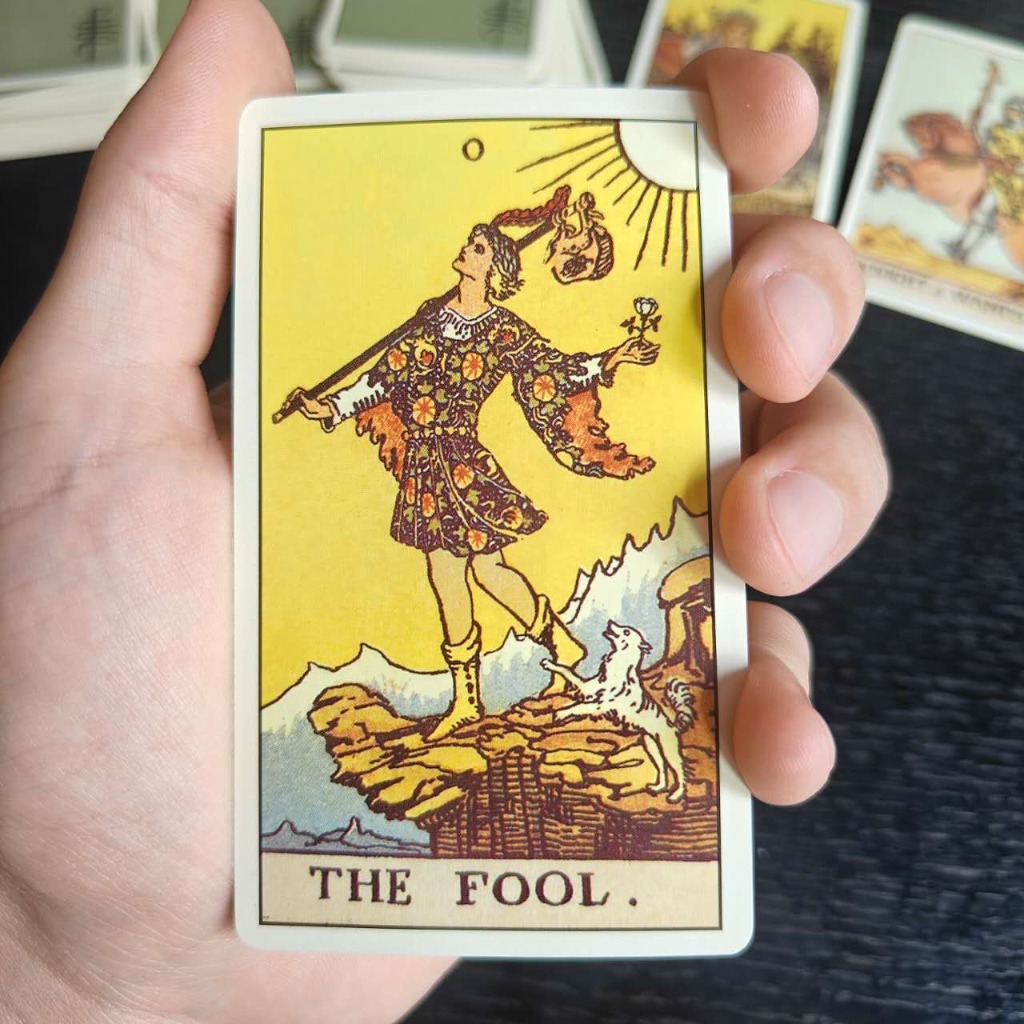
It can produce a fluent essay structured like one — meanings, spreads, interpretation. It cannot perform the one act that makes it a reading: drawing the cards. There is no deck and no shuffle; the “spread” is generated like any other plausible text. You are reading a well-written description of a tarot reading that never physically happened.
Is it safe to make decisions based on AI readings?
No, and the reason is structural. A decision-grade reading needs information the reader could not have derived from what you told them, plus accountability if they are wrong. AI has neither. Use it to learn, to think, and to prepare your question — then take that question to a verified human when the answer matters.
What is the single best use of AI in the spiritual space?
Question preparation. Most paid readings fail because the question was vague, not because the reader was weak. Use AI to compress your situation into one specific, answerable sentence — then spend your money on a human reader with a verified record answering exactly that.
For the fraud-detection toolkit that applies to human readers (and tells you what AI’s invention looks like when a person does it), read how to spot a fake psychic. For how to evaluate a real reader before spending, see how to choose a psychic reader. For what a genuine reading is supposed to contain, start with what is a psychic reading.